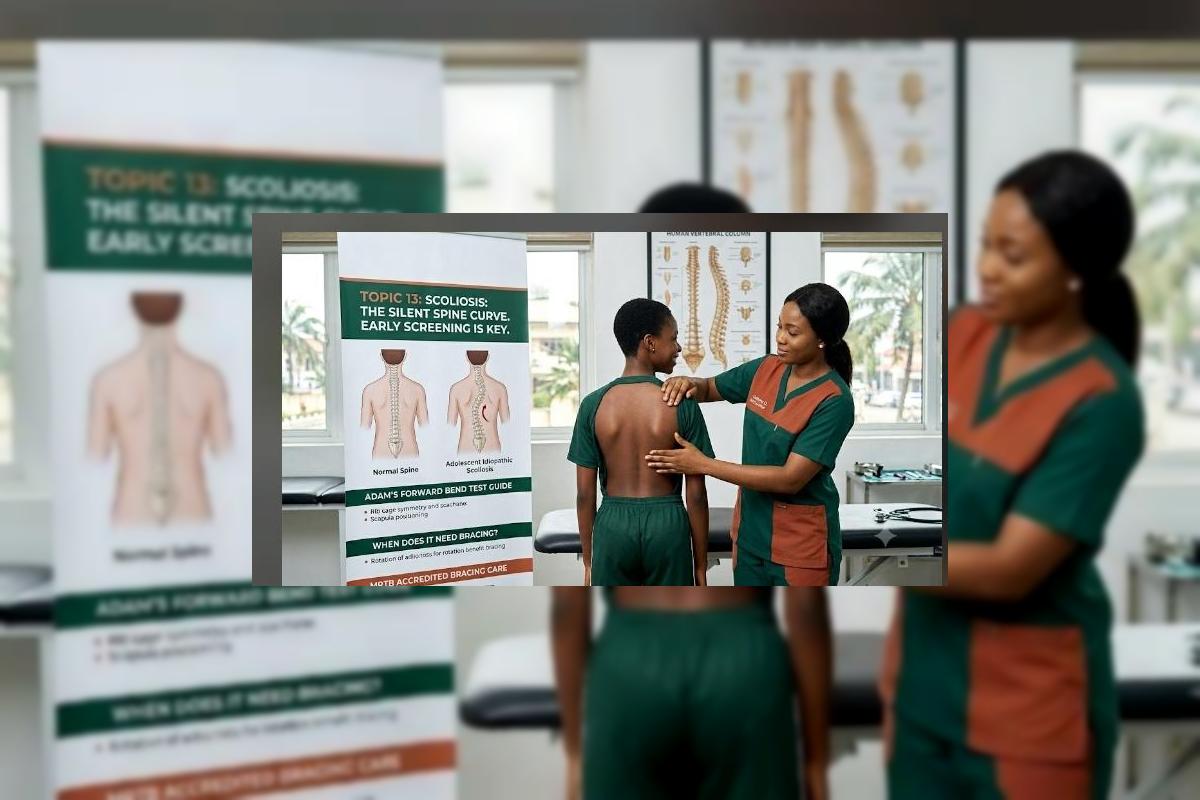

The silence surrounding adolescent spinal health in Nigeria is not merely a social oversight; it is a profound orthopedic and developmental tragedy. For a teenager entering their growth spurt, an undetected, progressive spinal curve is a ticking clock toward permanent deformity, respiratory restriction, and lifelong chronic pain.
"Dismissing the early, subtle postural changes of a growing teenager as 'bad posture' or 'laziness' is a severe clinical failure. True advocacy demands that we normalize systematic school and home screening, refusing to let the window for non-surgical, brace-based intervention close before it is even recognized.
In the landscape of pediatric spinal health in Nigeria, we find ourselves at a critical crossroads between cultural silence and modern orthopedic science. Adolescent Idiopathic Scoliosis (AIS), a condition where the spine develops a sideways, rotational curve during rapid growth, is frequently missed in its early stages. Because the condition is often painless in the beginning, families often ignore the uneven shoulder heights or asymmetrical waistlines until the curve is visually obvious and structurally fixed. Yet, while public health efforts prioritize infectious diseases and acute trauma, the window to use custom-molded spinal orthoses to guide spinal alignment slams shut the moment skeletal maturity is reached. Proactive screening is not an elective luxury; it is a structural mandate. When we fail to perform regular Adam’s Forward Bend Tests during the early teenage years, we permit progressive curves to turn perfectly treatable skeletal shifts into major, irreversible surgical requirements.
The Three Barrier Cards: Why Nigeria’s Teenagers Face Avoidable Spinal Deformity
To revolutionize spinal care across the nation, we must dismantle the three structural pillars of exclusion that keep AIS screening Nigeria data hidden. These systemic and knowledge-based gaps dictate whether a teenager grows into a straight, healthy adult or carries a debilitating spinal rotation for life.
| Barrier | The Impact on the Adolescent | The Necessary Shift |
|---|---|---|
| The Screening Vacuum | School health programs lack standardized spinal assessment protocols, missing the early 'rib hump' signs. | Mandating the Adam’s Forward Bend Test as a routine part of all secondary school physical checkups. |
| The 'Bad Posture' Myth | Parents misattribute the initial, subtle spinal rotation to slumping, delaying clinical X-ray evaluation. | Launching public awareness to help parents identify clear signs of asymmetry versus behavioral slumping. |
| Accredited Care Scarcity | Lack of access to specialized, MRTB-accredited orthotic centers leaves families with no options for non-surgical bracing. | Expanding the network of certified clinical orthotists trained in custom scoliosis brace fabrication. |
"A spinal curve in a teenager is not static; it is dynamic and aggressive during growth. If we do not intervene with structured bracing to counteract the rotation, the spine will continue to spiral toward a point of no return."
Clinical Profile: The Biomechanics of Non-Surgical Spinal Guidance
Adolescent Idiopathic Scoliosis is characterized by a three-dimensional deformity: the spine bends to the side and rotates like a twisting staircase. As the spine rotates, it pushes the ribs on one side backward, creating the telltale 'rib hump' seen during the Adam’s Forward Bend Test. This rotation is what causes the long-term postural imbalances and, if left unmanaged, the restrictive lung function issues. Modern, accredited clinical management uses the 3-point pressure principle through custom-molded spinal orthoses. These braces do not 'force' the spine straight; rather, they provide corrective, directional forces that guide the spine’s growth as the teenager hits their peak height velocity. By applying pressure at the curve’s apex and allowing space for movement on the concave side, the brace physically blocks the curve's progression. Without this, the skeletal structure simply follows its path of least resistance—straight into a worsening deformity.
What Changes Everything: The Action Strip
Early recognition and the use of certified spinal orthotics deliver five concrete clinical and psychosocial breakthroughs. This is the blueprint for protecting a growing teenager's physical autonomy:
1 Halt of Curve Progression
Early application of custom braces effectively stops moderate curves from reaching the 'surgical threshold,' keeping the spine safe until skeletal maturity.
2 Preservation of Respiratory Capacity
By managing the rotation of the rib cage, bracing prevents the spine from crushing chest cavity space, ensuring that teenagers maintain full, healthy lung function.
3 Restoration of Postural Symmetry
Corrective bracing physically re-aligns the shoulders and waist, shielding the teenager from the psychological burden of noticeable, growing physical asymmetry.
4 Long-term Spinal Health and Pain Prevention
Preventing severe curves early avoids the high risk of premature, painful arthritis and secondary back conditions that plague adults with untreated, severe scoliosis.
5 Empowerment Through Participation
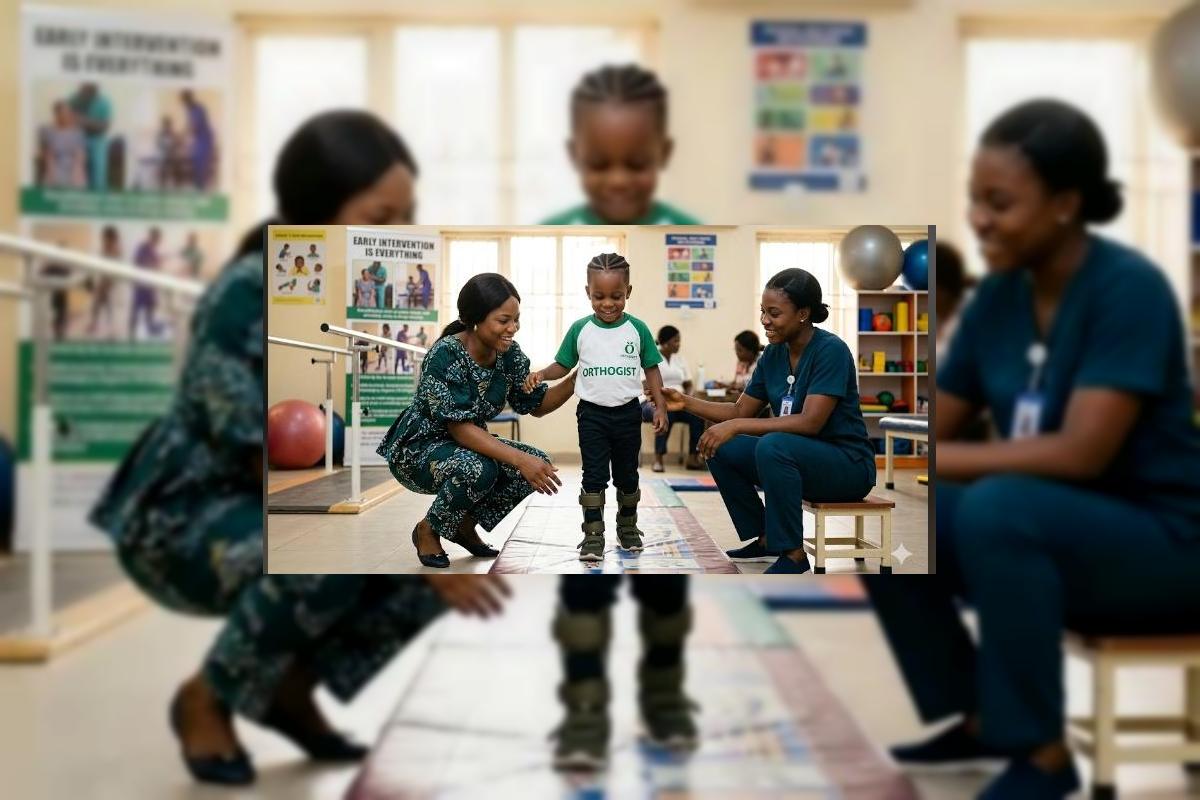
A teenager whose spine is managed with a modern, low-profile brace can continue active schooling, sports, and social engagement without the limitation or pain of a worsening curve.
The Biological Imperative vs. The Cultural Stagnation
True whole-body transformation requires replacing healthcare passivity with a fierce commitment to early detection. We must intentionally move away from waiting for curves to become 'visible' and embrace a modern paradigm where annual school spinal screenings and certified orthotic referrals are prioritized as the baseline for pediatric wellness.
| The Outdated Approach (Passive Neglect) | The Modern Standard (Proactive Screening) |
|---|---|
| Ignoring early rib humps as 'normal' or correcting them with ineffective posture drills. | Using the Adam’s Forward Bend Test to identify potential rotation immediately. |
| Waiting for a curve to be large enough to require invasive, life-altering major spine surgery. | Deploying non-surgical, custom-molded spinal orthoses at the first sign of progression. |
| Relying on spiritual or herbal 'aligners' that provide no structural support to a growing spine. | Utilizing MRTB-accredited orthotic fabrication for precise, biomechanical correction. |
| Accepting a twisted, painful adult life as an inevitable fate of being 'naturally' curvy. | Guiding the skeleton during growth to ensure a straight, functional, and pain-free spine. |
The time for clinical hesitation has ended. Every day a teenager spends with an unmanaged, progressive curve is a day their spine loses its potential for a straight, healthy future. We can no longer tolerate losing the potential of our adolescents to the waiting rooms of public ignorance and delayed medical referrals. **Disability awareness in Nigeria** must expand past community outreach and target the standards of our school health checks, the contents of our pediatric screening, and the priorities of our public health budgets. We are not just building braces; we are actively securing the physical foundations that guarantee every teenager the right to stand tall, move freely, and interact with their world with unyielding dignity.
A Call to Action
To parents and school administrators: Implement regular spinal screening programs; a simple 30-second forward bend test can change a child's entire life. To our medical community: Initiate orthopedic referrals the moment asymmetry is detected; the battle against spinal progression is won in the early growth years. To healthcare policymakers: Invest in the local training and infrastructure for certified scoliosis bracing; it is an essential economic and clinical investment for our next generation. A healthy, straight spine is a lifetime birthright, and your child’s growth must be protected.
Comments (0)
No comments yet. Be the first!
Please login to leave a comment
Login to Comment