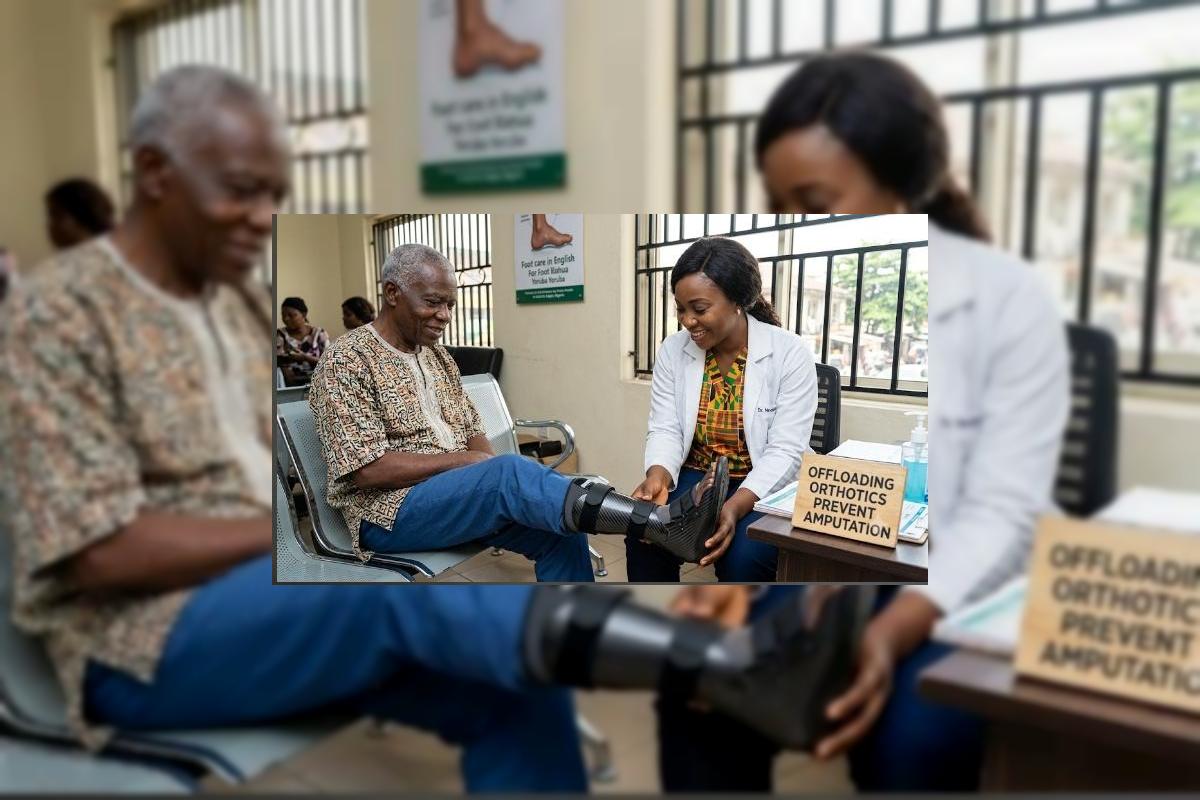

The silence surrounding diabetic foot complications in Nigeria is not merely a clinical oversight; it is a profound healthcare and developmental tragedy. For a diabetic patient, a simple, unnoticed blister on the sole of the foot is not a minor nuisance—it is the opening chapter of a potential, life-altering amputation.
"Condemning a patient to an amputation because we failed to provide basic pressure-offloading footwear is a catastrophic failure of our medical system. True advocacy demands that we treat the diabetic foot as a site of extreme vulnerability, deploying precision-engineered orthotics to stop ulcers before they ever threaten a limb.
In the landscape of chronic disease management in Nigeria, we find ourselves at a critical crossroads between rising diabetes prevalence and fragmented foot-care services. Patients living with diabetes often suffer from peripheral neuropathy—a loss of sensation that means they cannot feel the damage caused by poorly fitted shoes, sharp objects, or uneven ground. When a lesion or ulcer forms, the continuous pressure of walking on it acts like a drill, driving the wound deeper into the bone and surrounding tissue. Yet, while public health budgets focus heavily on blood sugar management, the vital mechanical management of the foot is routinely ignored. Precision offloading orthotics, such as custom-molded total contact insoles and specialized therapeutic footwear, are not luxury accessories; they are the most effective clinical tools we have to keep a patient mobile and limb-intact. When we fail to prioritize these interventions, we allow preventable wounds to spiral into severe infections, leading to the devastating, life-ending reality of amputation.
The Three Barrier Cards: Why Nigeria’s Diabetic Patients Face the Amputation Cycle
To revolutionize diabetic limb preservation across the country, we must dismantle the three structural pillars of exclusion that keep diabetic foot care Nigeria data hidden. These systemic and knowledge-based gaps dictate whether a patient maintains their independence or faces the permanent loss of a limb.
| Barrier | The Impact on the Individual | The Necessary Shift |
|---|---|---|
| The Sensation Gap | Patients do not feel pain from wounds due to neuropathy, continuing to walk on ulcers until infection reaches the bone. | Routine, mandatory daily foot self-inspections and clinical monofilament sensitivity testing for all diabetics. |
| Standard Footwear Danger | Common, tight-fitting, or hard-soled shoes create high-pressure points that cause the very ulcers they are meant to cover. | Replacing generic footwear with therapeutic, extra-depth, and soft-material orthotic diabetic shoes. |
| Orthotic Service Exclusion | Diabetic clinics focus on medication, with zero referral path to orthotists for pressure-relieving device fabrication. | Integrating certified prosthetist-orthotists into all diabetic care teams for immediate foot offloading. |
"A diabetic foot ulcer is a mechanical problem that requires a mechanical solution. You cannot 'heal' a wound caused by walking if you continue to walk on the same pressure points without protective offloading."
Clinical Profile: The Biomechanics of Pressure Offloading
Peripheral neuropathy is the silent architect of diabetic foot destruction. Because the nerves are damaged, the patient receives no "pain alert" when their foot is being subjected to repetitive, localized pressure during the gait cycle. This repetitive pressure causes localized ischemia (lack of blood flow), leading to tissue breakdown. The solution, which is internationally recognized, is Total Contact Offloading. A certified orthotist utilizes specialized pressure-mapping and custom molding to create an insole that redistributes the patient's body weight away from the ulcerated site and across the entire surface area of the foot. By utilizing soft, pressure-absorbing materials and a rocker-bottom sole design—which allows the patient to roll over their foot rather than striking it sharply—the orthosis removes the ground reaction forces that would otherwise prevent the wound from closing. This simple, biomechanical adjustment is the difference between a wound healing in weeks and an ulcer progressing to deep-seated osteomyelitis.
What Changes Everything: The Action Strip
Integrating custom-engineered diabetic offloading orthotics into standard care delivers five decisive biological and societal milestones. This is the structural framework required to rescue diabetic limb integrity:
1 Immediate Reduction of Ulcer Pressure
Custom total-contact insoles shift weight away from vulnerable bony prominences, creating the optimal mechanical environment for natural tissue regeneration.
2 Prevention of Ulcer Recurrence
By replacing ill-fitting, standard shoes with therapeutic footwear, patients eliminate the repetitive trauma that causes ulcers to break open again and again.
3 Preservation of Long-Term Mobility
Successful offloading keeps the patient walking independently, maintaining muscle mass and preventing the secondary health complications associated with forced bed rest.
4 Economic and Workforce Security
Preventing a major limb amputation allows individuals to remain in the workforce, continue to run businesses, and avoid the crippling costs of long-term disability and nursing care.
5 Restoration of Patient Confidence
When a patient can walk safely without the fear of developing a new, infected sore, they reclaim the agency to engage with their community and live without the constant, looming threat of limb loss.
The Biological Imperative vs. The Cultural Stagnation
True medical transformation requires replacing the passive 'wait-and-see' approach with a fierce commitment to active mechanical offloading. We must intentionally abandon the idea that diabetic foot care is only about blood sugar and dressings, transitioning instead into a regulated, multidisciplinary model where accredited orthotic intervention is prioritized as a life-saving, limb-saving standard.
| The Outdated Approach (Medication-Only) | The Modern Standard (Multidisciplinary Offloading) |
|---|---|
| Ignoring foot mechanics until an infection requires hospital-based surgical intervention. | Utilizing custom offloading orthotics at the first sign of redness or pressure, preventing the ulcer entirely. |
| Wearing generic, mass-produced shoes that cause friction and pressure, worsening foot health. | Fitting patients with custom-molded, extra-depth therapeutic shoes and pressure-redistributing insoles. |
| Assuming an ulcer will heal just with pills and gauze dressings. | Treating the ulcer as a mechanical problem that requires physical weight-redistribution to close. |
| Accepting high-level amputations as a 'normal' end-stage complication of diabetes. | Prioritizing limb preservation as a primary outcome of every diabetic patient's clinical care plan. |
The time for clinical silence has ended. Every day a diabetic patient walks on an un-offloaded, neuropathic foot is a day their limb moves closer to an avoidable crisis. We can no longer tolerate losing our citizens' limbs to the gaps of insufficient care and poor professional teamwork. Disability awareness in Nigeria must evolve to view accredited orthotic offloading as a basic, high-priority human right. We are not just making shoes; we are actively engineering the stability that guarantees every patient the right to stand, walk, work, and interact with their world with unyielding dignity.
A Call to Action
To patients and caregivers: Check your feet every single day—if you see a spot or blister, treat it as an emergency and consult a specialist immediately. To our diabetic care teams: Incorporate routine orthotic offloading into every patient's long-term care plan; the battle against ulceration begins before the wound is ever created. To our healthcare policymakers: Standardize the supply of high-quality therapeutic diabetic footwear across public health centers to prevent the massive economic burden of diabetic-related amputations. Orthonarra will continue to expose these coordinated clinical realities until multidisciplinary limb-preservation care is the baseline standard in every community. Complete independent mobility is a lifetime birthright, and your feet must be protected.
Comments (0)
No comments yet. Be the first!
Please login to leave a comment
Login to Comment