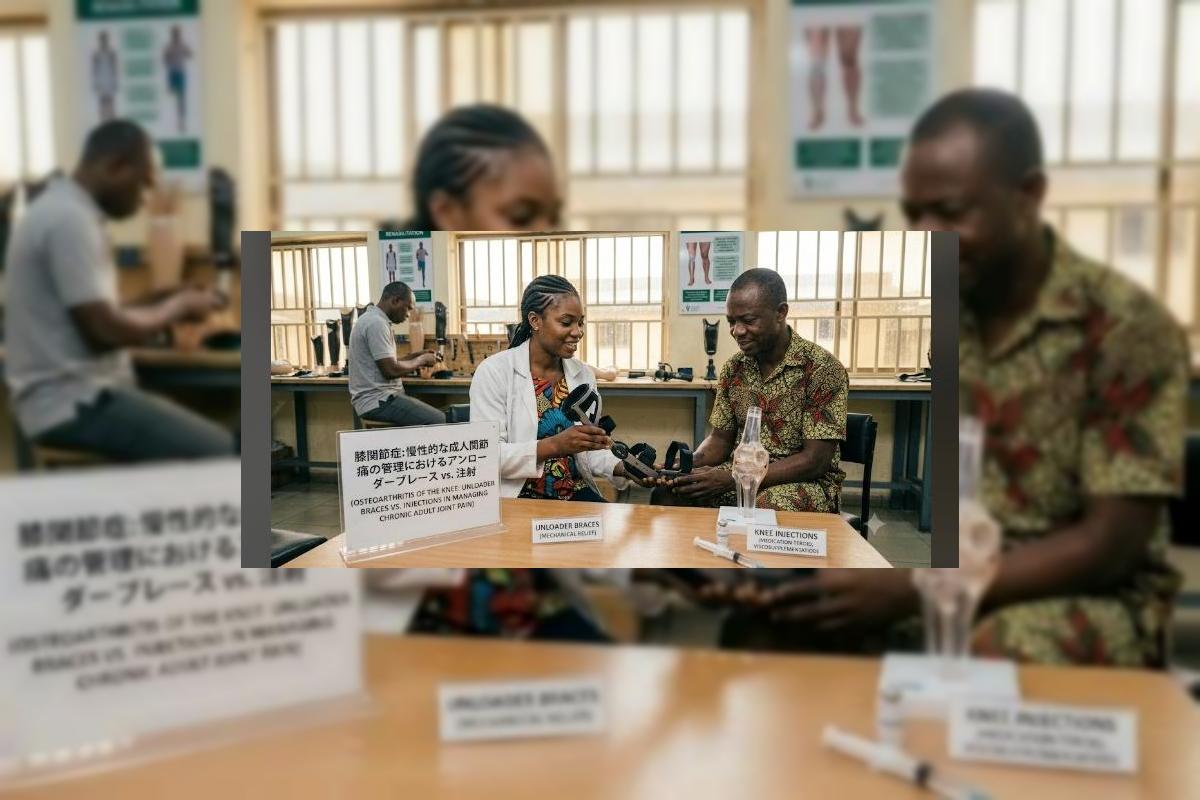

The silence surrounding the mechanical reality of knee osteoarthritis (OA) in Nigeria is not merely a social oversight; it is a profound orthopedic and functional tragedy. For an adult struggling with grinding joint pain, relying solely on endless cycles of painkiller injections while ignoring the structural misalignment of the knee is a direct path to premature disability and total joint replacement.
"Treating chronic knee osteoarthritis by masking pain with injections while leaving the joint's uneven weight distribution uncorrected is a severe clinical failure. True advocacy demands that we integrate mechanical offloading—specifically through specialized unloader orthoses—to physically shift pressure away from the damaged cartilage, refusing to let structural wear dictate a life of sedentary pain.
In the landscape of adult musculoskeletal care in Nigeria, we find ourselves at a critical crossroads between symptom-masking and structural restoration. Osteoarthritis of the knee is essentially a mechanical breakdown: as cartilage wears thin, the joint loses its natural shock-absorbing capability, causing bone-to-bone contact that leads to severe pain and stiffness. While many patients gravitate toward anti-inflammatory injections or herbal rubs for temporary relief, these methods do nothing to address the root cause: the uneven, concentrated weight-bearing forces that continue to drill into the damaged compartment of the knee with every single step. Unloader knee braces are not merely accessories; they are precise biomechanical tools designed to apply a 3-point leverage force that gently pushes the damaged side of the knee apart, allowing the joint to breathe and movement to occur without the constant, grinding friction.
The Three Barrier Cards: Why Nigerian Adults Face Avoidable Joint Progression
To revolutionize adult knee health across the country, we must dismantle the three structural pillars of ignorance that keep knee osteoarthritis Nigeria data hidden. These systemic and knowledge-based gaps dictate whether an adult continues to walk actively or falls into a cycle of chronic joint degeneration.
| Barrier | The Impact on the Individual | The Necessary Shift |
|---|---|---|
| The Injection-Only Loop | Patients repeatedly choose temporary pain relief over mechanical intervention, allowing cartilage damage to worsen unseen. | Educating the public that injections manage symptoms, while mechanical braces manage the joint structure. |
| The 'Natural Aging' Myth | Adults accept severe knee pain as an inevitable part of growing older, delaying professional orthopedic assessment. | Promoting the concept that knee pain is a manageable mechanical issue, not a mandatory part of aging. |
| Lack of Mechanical Literacy | Patients do not understand how a brace can 'unload' a joint, leading to a low demand for effective orthotic solutions. | Bridging the gap between orthopedic clinics and certified orthotic workshops to standardize bracing referrals. |
"An unloader brace is an external shock absorber. By shifting the body's weight away from the damaged, worn-out compartment of the knee, you give the joint the physical space it needs to move without agony."
Clinical Profile: The Biomechanics of 3-Point Unloading
In a knee with osteoarthritis, the "medial compartment" (the inner side of the knee) is most commonly damaged because we naturally put more weight on that side. This creates a vicious cycle: the more the cartilage wears away, the more the knee begins to bow, which in turn puts even more stress on the damaged side. A certified orthotist utilizes an unloader knee orthosis to break this cycle. The brace uses a rigid frame and strategic padding to apply a constant, corrective force—the "3-point pressure"—which pushes the knee joint slightly away from the damaged compartment. By essentially "opening" the joint on the painful side, the brace reduces pain, increases stability, and allows the patient to return to walking and daily activities that were previously avoided due to fear of the next sharp, grinding pain.
What Changes Everything: The Action Strip
Integrating custom-engineered unloader orthotics into adult OA management delivers five decisive biological and societal breakthroughs. This is the blueprint for preserving joint longevity:
1 Significant Pain Reduction Without Medication
By physically removing the pressure from the damaged joint compartment, unloader braces often provide immediate relief, reducing the need for high-dose painkillers and their side effects.
2 Delay of Total Knee Replacement
Effective mechanical offloading preserves the remaining healthy cartilage, potentially pushing the need for invasive surgical joint replacement years or even decades into the future.
3 Restoration of Functional Mobility
Bracing provides the stability and confidence needed for the patient to return to walking, climbing stairs, and staying physically active, which is essential for general health.
4 Reduction in Secondary Joint Compensations
When the knee is balanced, the patient stops limping, which shields the hips and lower spine from the premature wear-and-tear caused by uneven gait patterns.
5 Empowerment and Psychological Relief
Regaining the ability to move without the constant fear of sharp pain allows adults to reconnect with their social, professional, and community lives with dignity.
The Biological Imperative vs. The Cultural Stagnation
True medical transformation requires replacing passive symptom management with a fierce commitment to mechanical stability. We must intentionally abandon the 'injection cycle' that fails to address the underlying skeletal wear, transitioning instead into a model where accredited orthotic intervention is prioritized as a primary, essential defense against chronic osteoarthritis.
| The Outdated Approach (Pain-Masking) | The Modern Standard (Mechanical Unloading) |
|---|---|
| Relying solely on chemical injections or pills that ignore the knee's structural collapse. | Using custom unloader braces to physically offload weight from the damaged joint. |
| Accepting a limping, sedentary lifestyle as the only option for aging adults. | Engineering joint stability to maintain an active, high-quality, and mobile adult life. |
| Ignoring biomechanics while cartilage grinds away until surgery is the only path left. | Correcting the mechanical alignment early to preserve the joint's remaining life. |
| Waiting until the knee is bone-on-bone before seeking serious, evidence-based care. | Intervening at the first sign of mechanical pain to halt the cascade of joint destruction. |
The time for clinical silence has ended. Every day an adult spends ignoring the mechanics of their knee pain is a day their joint loses its potential for a pain-free, active future. We can no longer tolerate losing the potential of our aging citizens to the waiting rooms of public ignorance and outdated medical approaches. Disability awareness in Nigeria must expand past pediatric needs to include adult joint health, highlighting that custom orthotic care is a vital, high-priority human right. We are not just building braces; we are actively securing the physical foundations that guarantee every adult the right to stand tall, move freely, and interact with their world with unyielding dignity.
A Call to Action
To adults with chronic knee pain: Do not just mask the pain; seek a biomechanical evaluation from an accredited orthotist to see if an unloader brace can protect your joint. To our medical teams: Refer knee osteoarthritis patients early for orthotic assessment; mechanical intervention is a primary, evidence-based solution, not a last resort. To our healthcare policymakers: Invest in the availability and local fabrication of high-quality unloader orthoses; it is a critical investment in keeping our aging population active and productive. A pain-free, stable knee is a lifetime birthright, and your mobility must be protected.
Comments (0)
No comments yet. Be the first!
Please login to leave a comment
Login to Comment