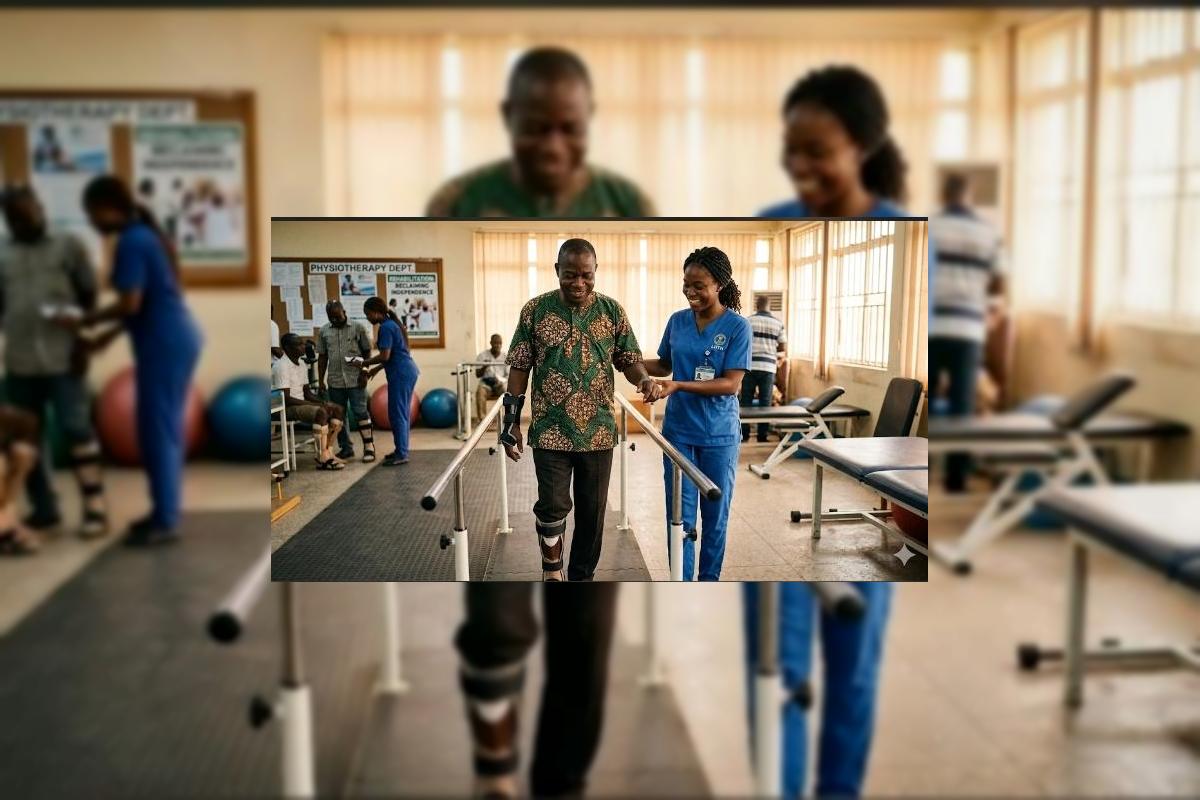

The silence surrounding comprehensive post-stroke mobility degradation in Nigeria is not merely a social oversight; it is a neurological and developmental tragedy. For a survivor battling to lift their foot while watching their arm permanently curl, unmanaged limb spasticity is a vicious double sentence to lifelong isolation.
"Restricting stroke rehabilitation protocols to a basic 'wait and see' approach for walking while ignoring the upper limb represents a dynamic clinical failure. True advocacy demands that we recognize simultaneous neuro-orthotic management as a baseline requirement for recovery, deploying custom Ankle-Foot Orthoses (AFOs) for gait and functional hand splinting at the first sign of elevated muscle tone.
In the landscape of adult neurological rehabilitation in Nigeria, we find ourselves at a critical crossroads between deep administrative neglect and modern neurobiology. Adults undergoing stroke recovery are routinely subjected to partial, inefficient treatment plans that fail to integrate the critical link between upper and lower extremity stabilization. Yet, while public health budgets prioritize acute care and ignore long-term functional mobility, the neurological windows required to preserve muscle length and rewire healthy movement patterns slam shut. Simultaneous multi-limb awareness is not a luxury; it is a structural mandate. When we fail to coordinate specialized AFOs and resting hand splints at the moment of stroke stabilization, we let unmanaged brain signals dictate whether a survivor operating within the community will ever type, hold a cup, or walk without an agonizing limp.
The Three Barrier Cards: Why Nigeria’s Stroke Survivors are Left Half-Restored
To revolutionize stroke care outcomes nationwide, we must dismantle the three structural pillars of exclusion that keep comprehensive post-stroke rehabilitation Nigeria data buried. These systemic and resource-based gaps dictate whether a survivor regains their workforce agency or sinks into permanent, total domestic dependency.
| Barrier | The Impact on the Adult | The Necessary Shift |
|---|---|---|
| The Lower-Limb Only Bias | Gait physical therapy proceeds while the dominant hand permanently clenches into a fixed, unusable contracture. | Mandating standardized simultaneous upper and lower limb neuro-orthotic tracking protocols. |
| Orthotic Service Fragmentation | Survivors travel to different clinics for hand splints versus leg braces, increasing catastrophic costs. | Creating integrated rehabilitation hubs providing both specialized PT and custom fabrication under one roof. |
| Delayed Spasticity Management | Brain injury signals create rigid, fixed deformities that are irreversible by the time bracing is introduced. | Prioritizing the early intervention of anti-spasticity orthotics within weeks of the initial event. |
"An adult brain damaged by stroke relies entirely on correct sensory feedback from the limbs to recover function. If the foot drop makes the toes drag, and the hand clenches into a fist, the nervous system permanently registers a broken, exhausting movement blueprint."
Clinical Profile: Breaking Down the Simultaneous Biomechanical Collapse
Following an upper motor neuron lesion, the brain loses its ability to send inhibitory signals, causing the limbs to enter continuous, simultaneous contraction. The lower extremity typically collapses into foot drop, where the toes drag, triggering a high-risk, exhausting gait to compensate. Simultaneously, the upper extremity enters powerful flexor spasticity, pulling the wrist downward and clenching the fingers into a tight fist. Without intervention, these postures rapidly lead to irreversible tissue shortening and joint contractures. A custom **Ankle-Foot Orthosis (AFO)** is an immediate necessity to lock the ankle at a safe, 90-degree angle, restoring clear swing phase and heel-strike stability. Simultaneously, a precision-molded **resting hand splint (WHO)** must be deployed to apply gentle, continuous counter-force, suppressing hyperactive reflexes and maintaining tissue length. Failing to treat both areas in coordinated tandem sacrifices long-term whole-body functional independence.
What Changes Everything: The Action Strip
Integrating custom-fabricated lower limb stabilization with functional upper limb positioning delivers five concrete clinical and socioeconomic breakthroughs. This is the structural blueprint required to restore functional autonomy:
1 Gait Restoration and Independent Walking
Custom AFOs eliminate toe drag, instantly providing safe ground clearance and restoring a fluent, heel-strike walking cycle, enabling survivors to leave behind dangerous, dependent mobility patterns.
2 Prevention of Upper Limb Contractures
Early positioning with resting hand splints mechanically opposes spasticity, preserving muscle length and protecting palmar skin integrity before soft tissues freeze into permanent, painful deformities.
3 Protection of Secondary Joint Stability
Orthotic alignment across both limbs shields the joints—specifically the knee, lower spine, and wrist—from severe, premature arthritis caused by high-energy compensation techniques and persistent misalignment.
4 Workforce Re-Entry and Economic Agency
Regaining simultaneous use of a leg and a functional dominant hand allows survivors to return to their jobs or manage businesses, moving from forced domestic dependency to financial self-sufficiency.
5 Restoration of Complex Self-Care and Dignity
Complete, multi-limb restoration allows survivors to feed, dress, and clean themselves without assistance, lifting the crushing psychological weight of total caregiver reliance.
The Biological Imperative vs. The Cultural Stagnation
True whole-body transformation requires replacing healthcare passivity with a fierce commitment to complete physical restoration. We must intentionally move away from outdated models that focus solely on walking and abandon the unmanaged hand, transitioning into a modern paradigm where coordinated upper and lower limb neuro-orthotics are prioritized as an essential indicator of complete stroke recovery success.
| The Outdated Approach (Passive Neglect) | The Modern Standard (Comprehensive) |
|---|---|
| Letting a spastic upper limb permanently curl to the chest while prioritizing walking. | Deploying functional hand positioning at the first sign of upper extremity spasticity. |
| Treating foot drop and hand spasticity at different facilities as unrelated events. | Establishing simultaneous, integrated AFO and hand splint fabrication protocols. |
| Relying on generic metal-and-leather braces that restrict, exhaust, and cause skin irritation. | Fabricating ultra-lightweight, high-performance thermoplastic custom orthoses for both limbs. |
| Accepting high-energy compensation limping as an inevitable fate after brain injury. | Rebuilding natural, protected biomechanics to ensure full whole-body autonomy. |
The time for clinical hesitation has ended. Every day a survivor spends with unmanaged, progressive spasticity in any limb is a day their biological tissues solidify into permanent limitations. We can no longer tolerate losing the potential of our citizens to the waiting rooms of public ignorance and delayed medical referrals. **Disability awareness in Nigeria** must expand past community outreach and target the standards of our medical referrals, the contents of our therapy plans, and the priorities of our public health budgets. We are not just building braces; we are actively securing the physical foundatons that guarantee every citizen the right to touch, hold, walk, work, and interact with their world with unyielding dignity.
A Call to Action
To stroke survivors and caregivers: Demand a comprehensive whole-body assessment at the very beginning of rehabilitation; your right to move both your arm and leg must be protected. To our medical community: Initiate orthopedic referrals simultaneously with acute care stabilization; the battle against contracture begins at discharge. To healthcare policymakers: Subsidizing the import of specialized thermoplastic and structural resin raw materials is a vital economic investment that cut long-term healthcare dependency costs Nationwide. Complete functional autonomy is a lifetime birthright, and your mobility must be preserved.
Comments (0)
No comments yet. Be the first!
Please login to leave a comment
Login to Comment